

rFpro launches AV elevate IN CABIN
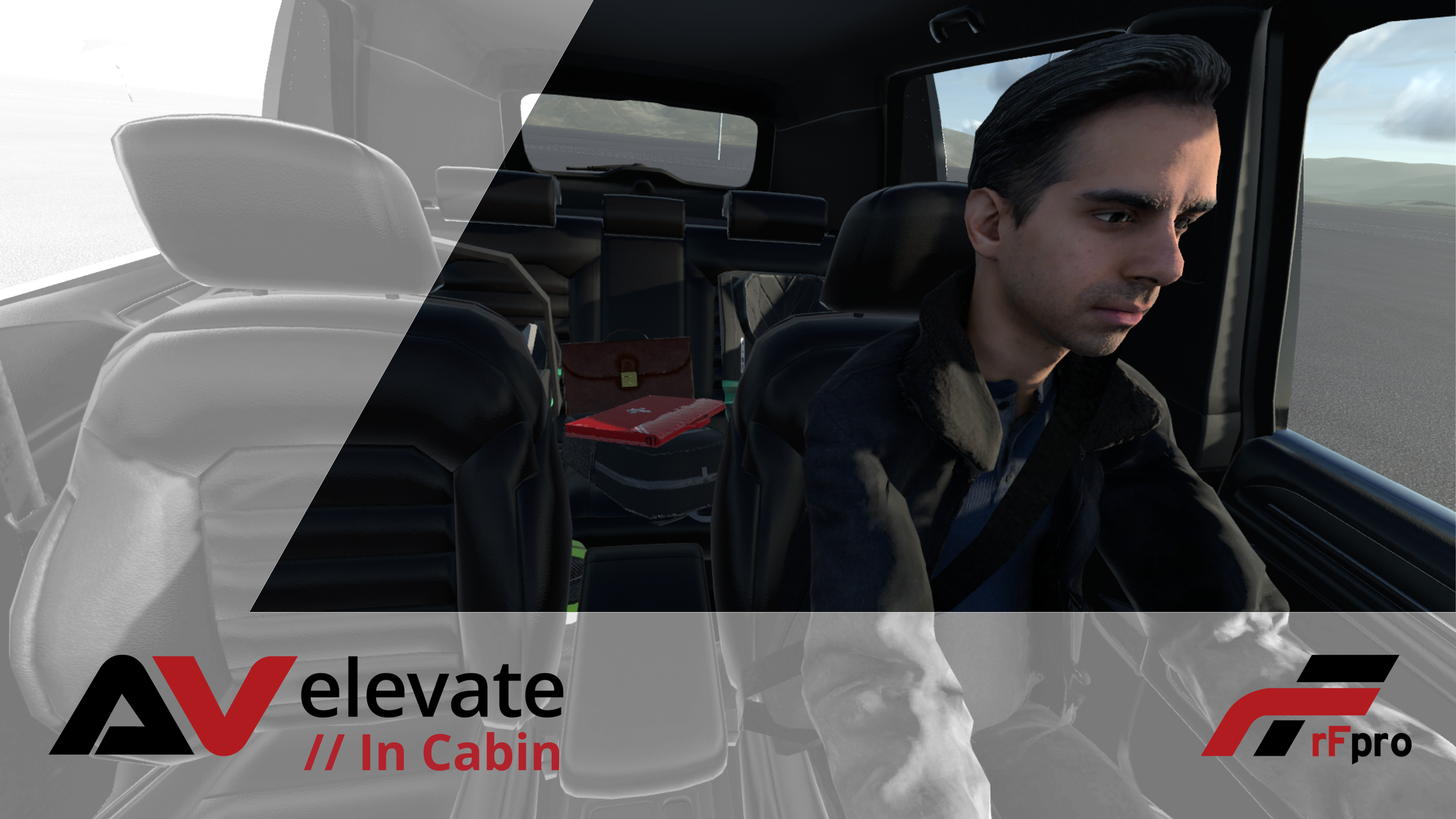

rFpro develops new interior simulation solution specifically for tuning, training and testing in-cabin driver and occupant monitoring systems
In-cabin system safety weighting dramatically increased in the latest Euro NCAP protocols driving demand for a simulation solution from OEMs and sensor supplier
The new capability includes the integration of IR camera and radar sensors, higher fidelity vehicle interiors and a pre-configured library of Euro NCAP in-cabin test scenarios, saving time and accelerating development
Simulation software specialist, rFpro, has launched AV elevate IN CABIN. The add on package enables automotive OEMs, Tier 1’s and sensor developers to tune, train and test driver and occupant monitoring systems in simulation, improving the speed and consistency of in-cabin testing, and starting long before any physical prototype exists.
Under Euro NCAP’s new 2026 protocols, the weighting of driver and occupant monitoring systems on a vehicle’s safety rating has significantly increased. For example, Driver Monitoring Systems has increased from a maximum of two points to 25 and child presence detection has increased from four points to five. At the same time, Advanced Driver Distraction Warning (ADDW) becomes mandatory for all new vehicles from July 2026 under the EU’s General Safety Regulation. The challenge for OEMs and their suppliers is that these systems must work reliably across a vast range of real-world conditions and testing them physically is slow, expensive and limited in scope.
“Euro NCAP’s 2026 scoring changes make in-cabin monitoring one of the most consequential areas of vehicle safety development. When you combine that with ADDW becoming mandatory, it is clear that the demand to develop and validate these systems faster and earlier in the programme will only grow,” said Matt Daley, Technical Director at rFpro. “We have taken our proven exterior simulation solution and applied the same techniques to the interior. AV elevate IN CABIN is a physically accurate, engineering-grade simulation environment enabling thousands of tests to be conducted before anything physical has even been built.”
rFpro’s new AV elevate IN CABIN addresses three core areas of in-cabin simulation: the fidelity of the virtual cabin environment, the control of occupant behaviour within it and the physical accuracy of sensor perception.
Interior fidelity
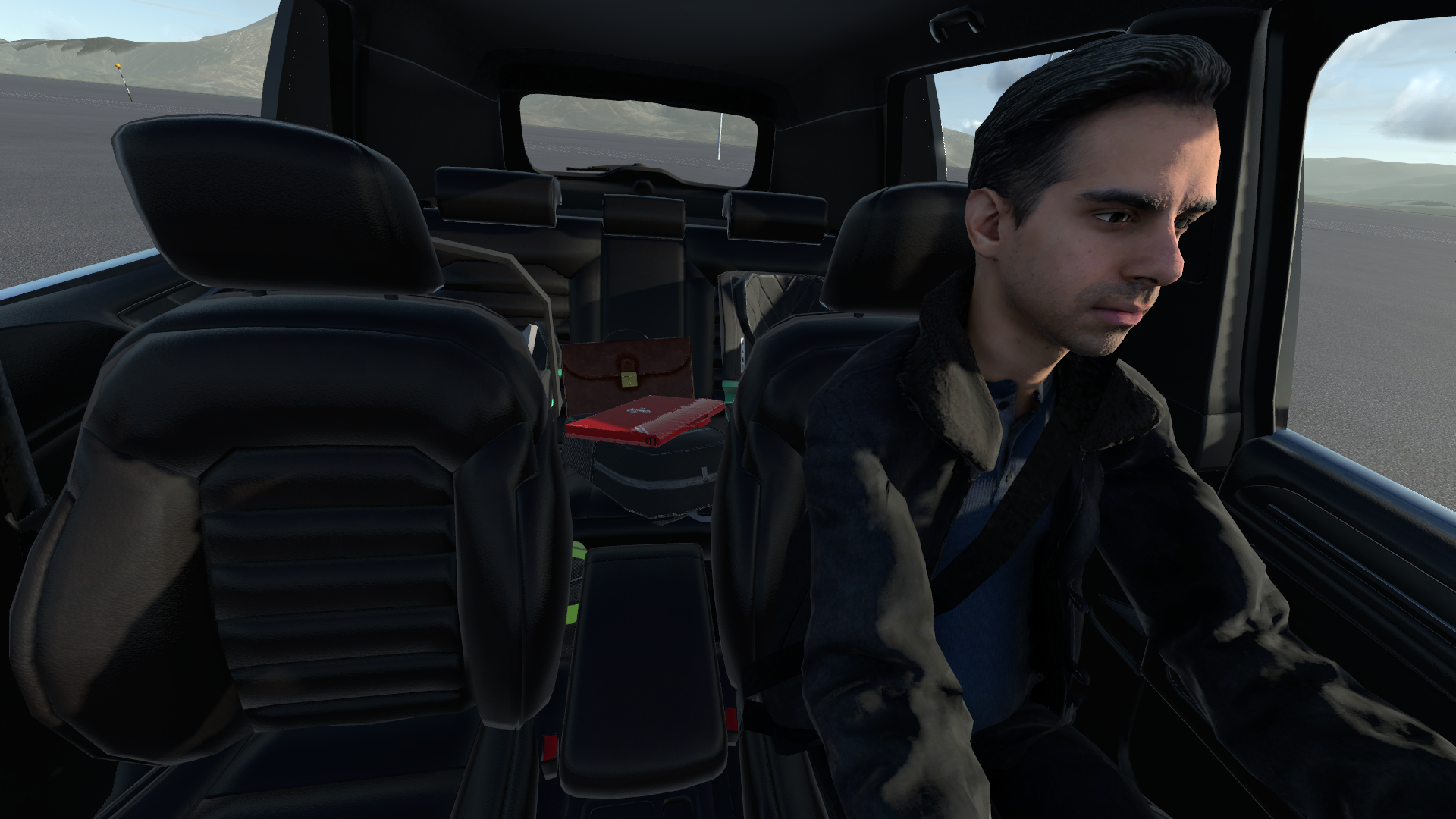
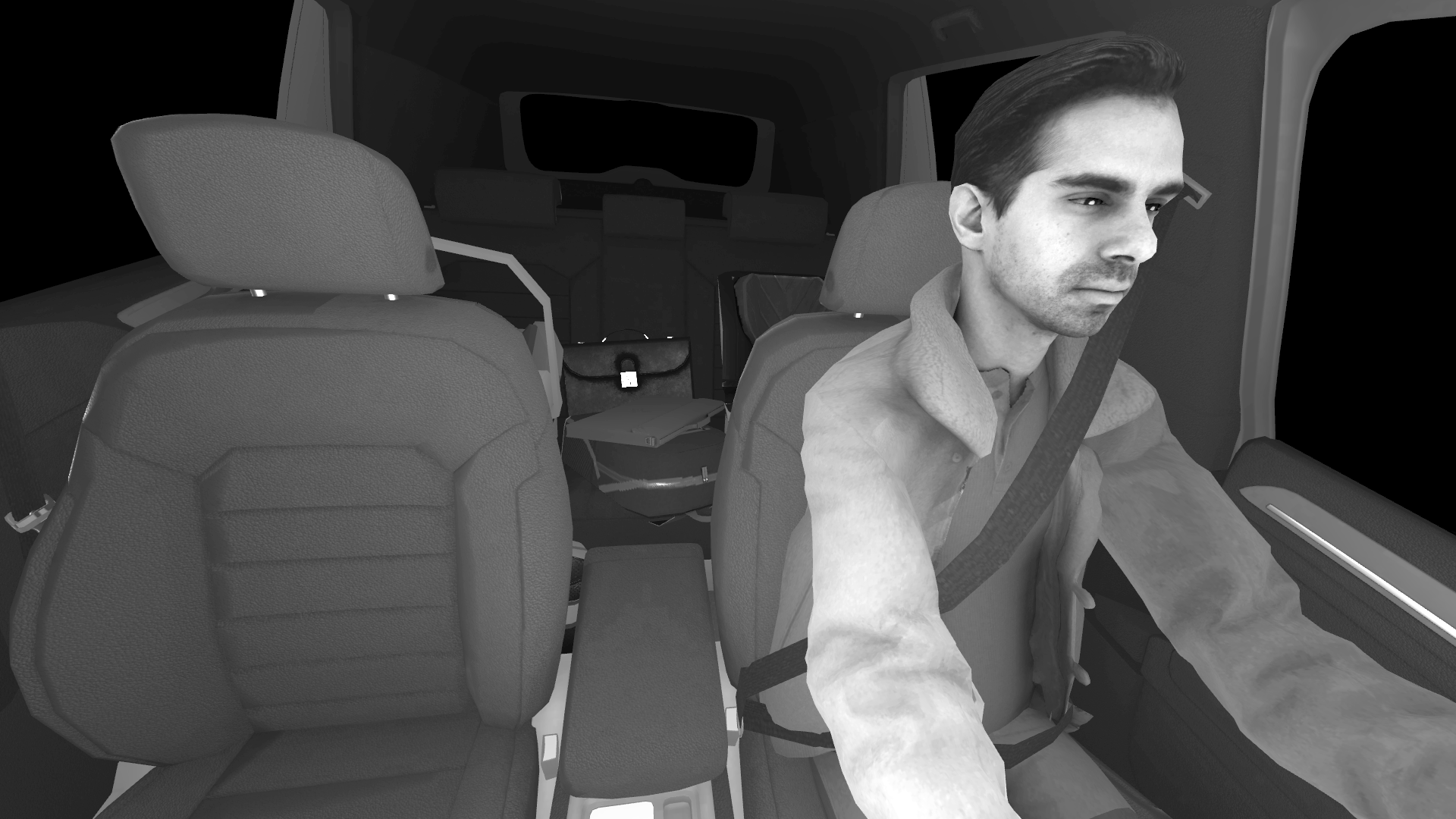
rFpro has improved the fidelity of its vehicle interior models by adding sub-structures that are invisible to the human eye and to cameras but are detected by radar. The metal framework within seats, for example, is now modelled to ensure radar-based sensing systems encounter realistic returns.
rFpro’s in-cabin object library has also been expanded to include items commonly found inside vehicles, including rucksacks, laptops, child seats, pets and other personal belongings.
Skin simulation has also been improved, with higher-detail facial models to support systems that assess driver state from facial features.
Controlling the virtual environment
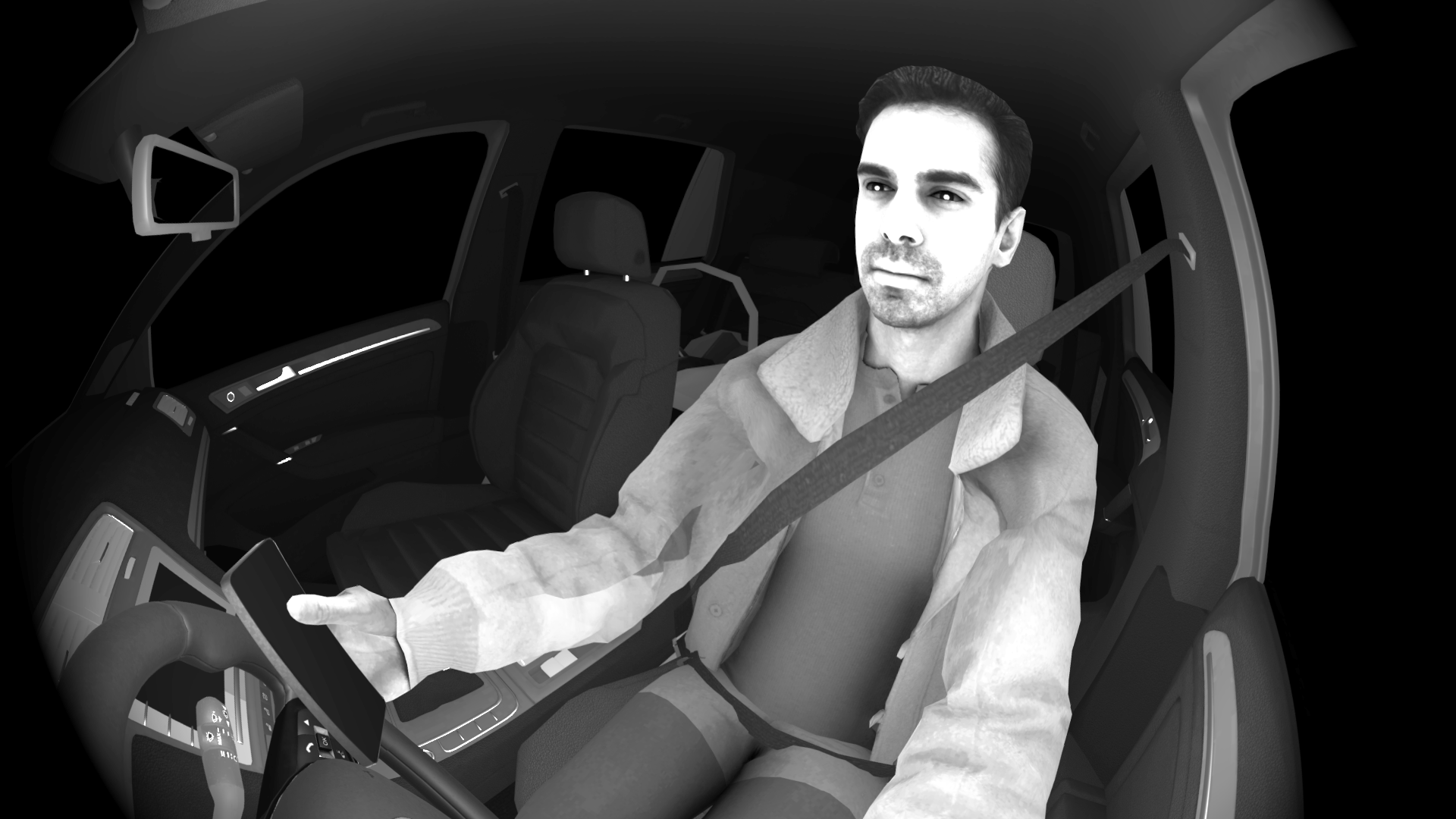
A high-density bone rig within rFpro’s human models enables fine control of facial and limb movements, supporting simulation of the macro and micro expressions that driver monitoring systems must detect. This includes ‘owl movement’, where the driver turns their head, and ‘lizard movement’, where only the eyes shift away from the road.
“We have even considered details like opening and closing vehicle windows,” continued Daley. “That is not something you need to think about for external sensor simulation, but it fundamentally changes how light and radar energy travel through the cabin. If you are developing an in-cabin system that needs to work reliably in the real world, these are the kinds of variables you have to account for.”
Sensor modelling
Most in-cabin systems use a mixture of radar sensors, visible light cameras and IR cameras, that ‘see’ using their own IR energy source. rFpro’s new IR camera sensor integration accurately models the energy emitted by the camera and how it interacts with every cabin surface. Specific IR reflectivity and radar properties have been assigned to all interior materials, including the driver’s skin, seats and windows. These material characteristics have been correlated with laboratory measurements conducted under the Sim4CamSens research programme, with the National Physical Laboratory and Compound Semiconductor Applications Catapult involved in the testing. Skin reflectivity, for example, has been characterised down to the difference between a nose, chin and cheek to improve the realism of IR camera data.
A Euro NCAP test package with pre-configured scenarios covering all base driver and occupant monitoring assessments will be made available. rFpro is now the only simulation platform supporting both external and internal sensor development within driver-in-the-loop, hardware-in-the-loop and software-in-the-loop environments, meaning the same platform already used to develop ADAS and autonomous driving systems can now cover in-cabin sensing too.
“Looking further ahead, understanding who is in the cabin and what they are doing is essential for autonomous vehicle operations, not just for safety, but for the passenger experience. If you know where occupants are, you can optimise everything from airbag deployment to noise-cancelling audio,” added Daley. “We are looking to partner with sensor developers and OEMs to help drive the direction of this capability further.”